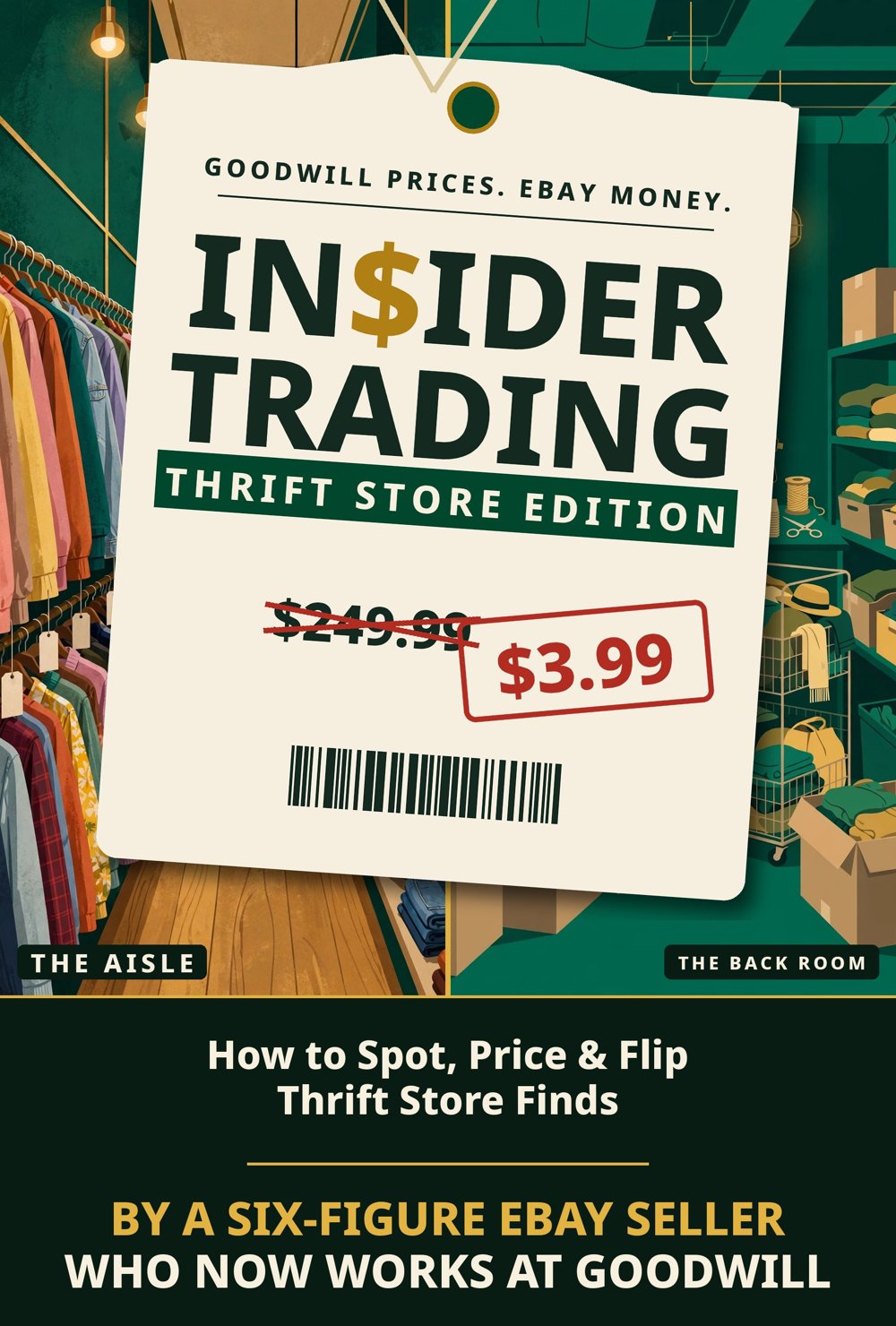
The six-figure thrift flipper went to work on the other side of the counter — inside Goodwill — and wrote down everything the pricing machine doesn't want you to know.
How items really get priced, the color tag clock, what never reaches the floor, and the watchlist of what's sleeping, what's hot, and what's a trap.
Get the Insider Watchlist free, plus first word the day the book drops. No spam — the list is for the launch.
NOW LIVE ON AMAZON · ALSO SELLING DIRECT BELOW"He bought a Rolex a store had marked as counterfeit. His research said otherwise. It sold for over $17,000."
Every item that reaches a thrift store floor is priced by a human moving thousands of pieces a day. Before a price exists, the item gets graded — fast — on four questions. Learn the questions and you can buy the answers the pricer got wrong.
Like new, normal, acceptable — or reject. The roughest item on the floor still passed somebody's "acceptable." The ladder decides what gets priced at all.
What was it when it was new? Real materials and a known brand — or disposable? This is where two identical-looking shirts stop being identical.
Current, classic, fad, vintage, or rare. A fad past its week prices like a fad. A classic prices like rent. Rare is where the chart quietly stops applying.
The one shoppers never guess: how full is the department? The same coat is priced to move on a packed rack and priced with ambition on a thin one.
Part One is the story — $3 Polo shirts to a million-dollar year, fourteen flea market booths, and losing it all. Part Two is the playbook, written from the pricing floor.
One education from selling what the stores sold him. One from working inside the store. Nobody else writing about thrifting has both.
A taste of the watchlist — the categories an insider watches, from eight years on both sides of the counter. The full list, with the reasoning, is in the book.
Buy direct from this site — paperback shipped to you, ebook delivered after checkout — or get it on Amazon in paperback or Kindle. The bundle lives only here.
Prefer Amazon? Get the paperback on Amazon
Prefer Amazon? Get the Kindle edition on Amazon
Jack Marlowe has spent eight years in the thrift business — from every side of the counter there is. He started in 2012, thrifting Goodwill stores and yard sales with his sister, and turned $3 Polo shirts into a six-figure eBay business: Titanium PowerSeller status, some 10,000 active listings, a crew of four, fourteen flea market booths, and over a million dollars in gross sales in his final year.
Then addiction took the business, the inventory, and nearly everything else. What it didn't take was the knowledge.
Today he works at Goodwill, putting out some 2,300 pieces of clothing a day — watching the pricing machine from inside, and teaching what he sees. He lives in Louisville, Kentucky.
No. It's one man's experience on both sides of the counter — as a shopper, a seller, and an employee. It isn't endorsed by Goodwill Industries or any local Goodwill organization, and it doesn't reproduce any internal documents.
It's a pen name. The author currently works at Goodwill, and the name protects the day job while the book tells the truth. Amazon has his real name privately, the way it does for every author it pays.
No — and be suspicious of any book that promises that. This one teaches a system: how thrift pricing works, where the gaps are, and how a real operator ran the numbers. What you build with it is on you.